The Institutional Strategic Initiatives portfolio increases the University of Toronto’s capacity to support large-scale, high-impact interdisciplinary research

Defence & Sovereignty Network (DSN) Seed Funding Program
The Institutional Strategic Initiatives Office is launching the Defence & Sovereignty Network Seed Funding Program to strengthen U of T’s capacity for interdisciplinary research in defence, sovereignty, and dual-use innovation.
Defence & Sovereignty Network (DSN) Seed Funding Program
The Institutional Strategic Initiatives Office is launching the Defence & Sovereignty Network Seed Funding Program to strengthen U of T’s capacity for interdisciplinary research in defence, sovereignty, and dual-use innovation.
Upcoming events and latest news

SRI leadership and affiliates join global call for urgent AI cybersecurity safeguards
More than 400 academics from over 30 countries have signed an open letter calling for immediate changes to how artificial intelligence systems are developed, tested and deployed, with the aim of preventing cybersecurity incidents that could threaten critical infrastructure. Signatories include many members of the Schwartz Reisman Institute for Technology’s leadership team, including Director David Lie, Associate Director Sheila McIlraith, Strategic Advisor Geoffrey Hinton, and Chair Roger Grosse, as well as Faculty Affiliates Nicolas Papernot, Thomas Ristenpart, and Gillian Hadfield, among others.

EPIC awarded Institutional Strategic Initiatives (ISI) Stage II Funding
EPIC has secured renewed five-year funding and with it, a new name, a broadened mandate, and an even closer working relationship with the Institute of Health Emergencies and Pandemics (IHEP). With this new phase also comes a change in leadership. After five years at the helm, Scott Gray-Owen is stepping back as academic director, with Rupert Kaul stepping into the role. Kaul will be joined by co-directors Nelson Lee, professor at the Dalla Lana School of Public Health and director of IHEP, and Nicole Weckman, assistant professor and Paul Cadario Chair in the Centre for Global Engineering at the Faculty of Applied Science & Engineering.

TRANSFORM HF awarded Institutional Strategic Initiatives (ISI) Stage II Funding
TRANSFORM HF was recently awarded Stage II competition funding from U of T’s Institutional Strategic Initiatives portfolio to continue building on the momentum of their first five years – and grow in new directions that reflects the community’s insights and priorities. In the next chapter, TRANSFORM HF 2.0, The initiative will continue to be led by Craig Simmons (Professor, Department of Mechanical & Industrial Engineering and Institute of Biomedical Engineering) and Heather Ross (Professor of Medicine at the University of Toronto and Clinician Scientist in the Division of Cardiology at the Peter Munk Cardiac Centre).

Bioeconomy and Sustainable Materials Institute (BSMI) has received funding from the Access Programs University Fund (APUF)
BSMI team has secured funding from the Access Programs University Fund (APUF) to connect First Nations, Métis, and Inuit (FNMI) youth in Northern Ontario with post-secondary opportunities in digital construction, sustainability, and forestry. This program brings together faculty from Engineering, UTM, Architecture, Rotman, and UTSC alongside Seven Generations Education Institute, Northern College, and industry and community partners, projected to unfold over 2 years.
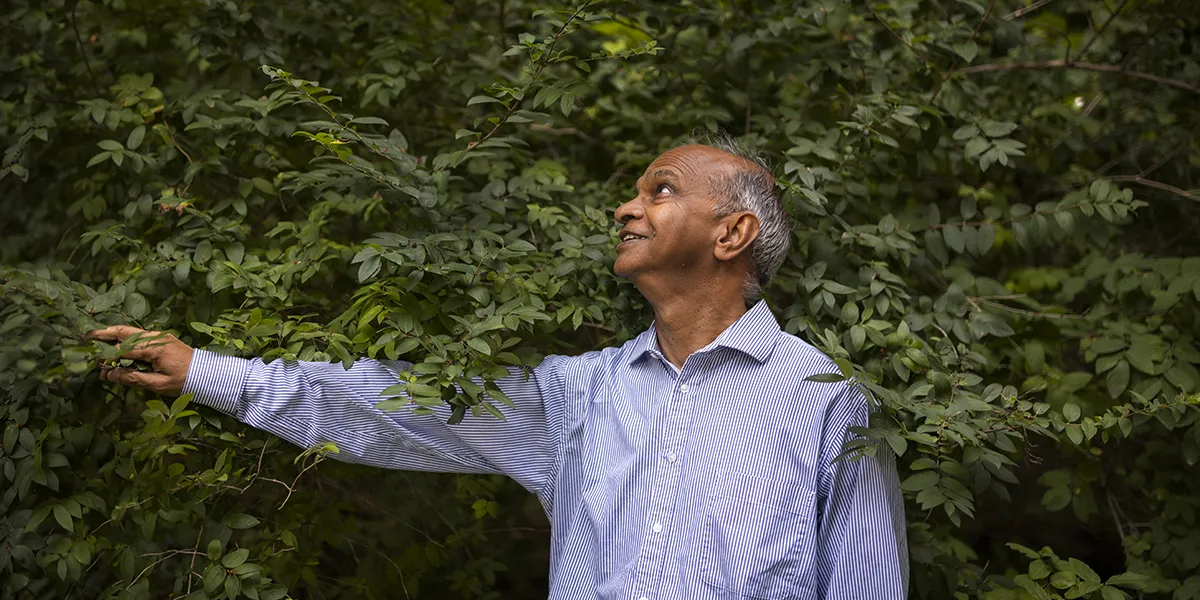
BSMI associate director Shashi Kant receives Paul W. Fox Award, recognizing nearly 30 years of distinguished voluntary service to the university
Shashi Kant says this award is especially meaningful because it recognizes his impact on people. “The other awards were for my academic achievements. This award is closest to my heart because it’s an acknowledgement of how I treat people and the way I’ve influenced their thinking and their lives.” Reflecting on the award, Kant emphasizes the collective nature of his work: “We achieved everything together. I lead from behind because if you treat human beings as human beings, they can do wonders."

University of Toronto researchers create map that tracks tariff impacts across Canadian cities
Following the initial tariffs on steel and automobiles in March 2025, researchers at the University of Toronto launched MappingTariffs, a website that displays the impact of tariffs across Canada. Karen Chapple, director of the School of Cities and co-founder of the mapping project, is co-leading a team of researchers examining the effects of tariffs. Chapple said the map is based on regional growth and decline from an “urban perspective.”